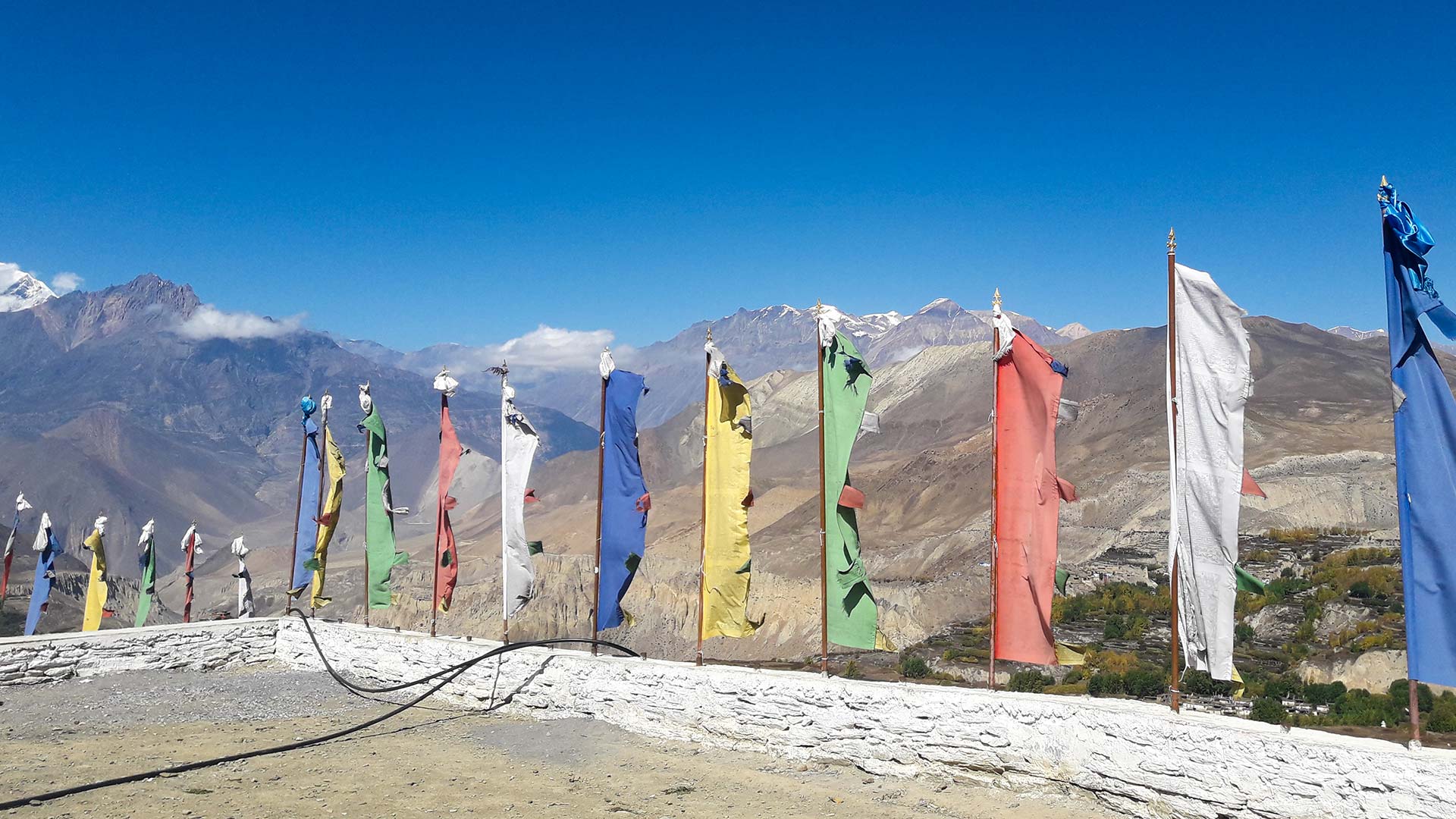
Mustang is a land where spirituality is not just an accessory to the landscape: it is its deep fabric. Here, Tibetan Buddhism permeates every daily gesture, every village, and every path. The monasteries — the gompas — are not just places of worship, but centers of community life, guardians of secular traditions and an artistic heritage that has remained intact through the centuries.
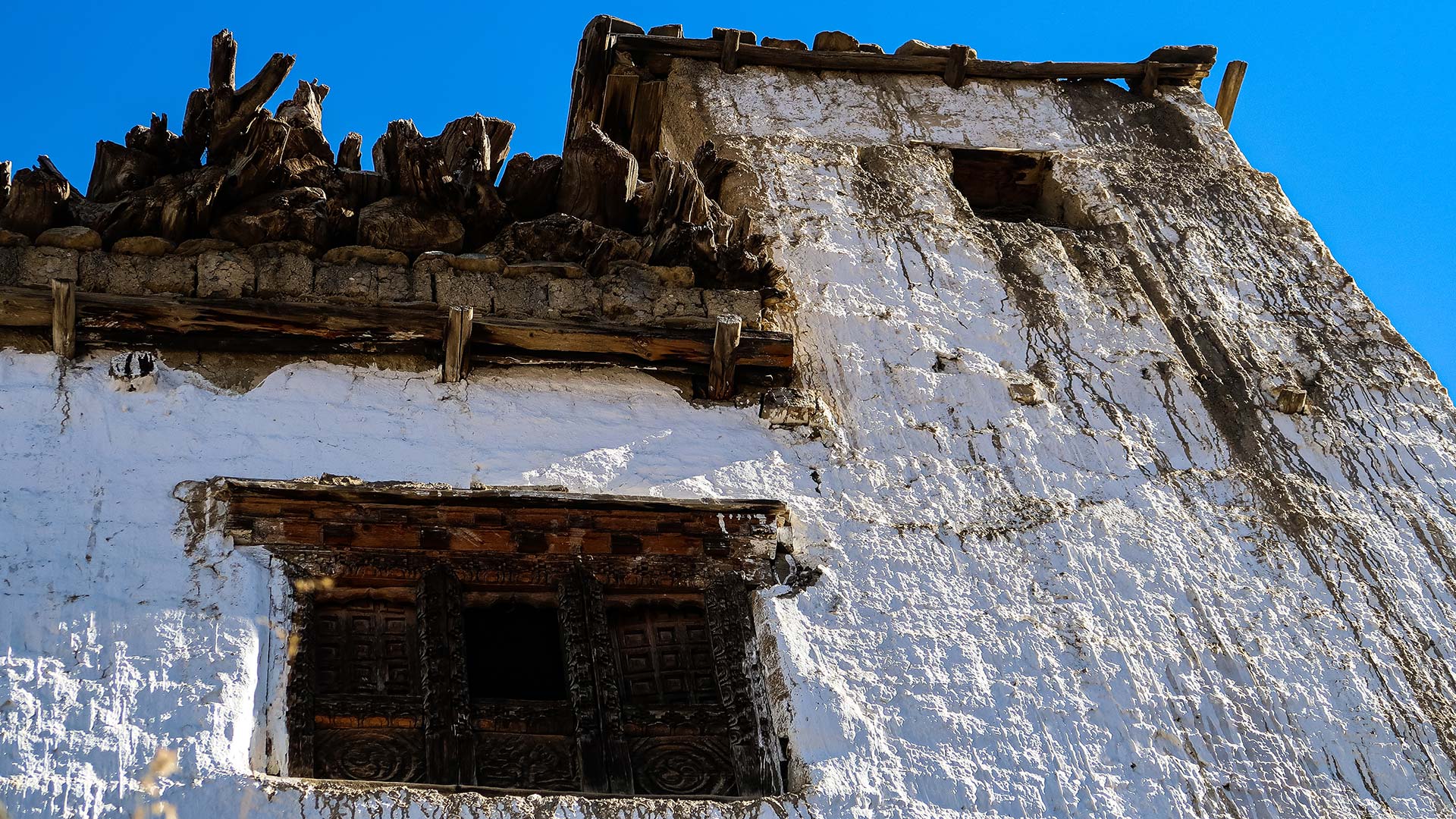
Upper Mustang, once an independent kingdom, has maintained a strong Tibetan cultural identity. The monasteries, often perched on rocky outcrops or hidden in remote canyons, preserve frescoes, statues, and mandalas of extraordinary beauty. Many of them date back to the 15th century or even earlier, representing one of the purest testimonies of Himalayan Tantric Buddhism.
During the trek, you will encounter some of the most significant religious sites in the region:
The religious spirit of Mustang also manifests in the details:
Every village has its chörten, every house a small domestic altar. Spirituality is not confined to monasteries: it is an integral part of daily life.
Visiting the monasteries of Mustang means coming into contact with a culture that has managed to preserve itself over the centuries, despite isolation and difficulties. It is a journey that is not limited to physical movement, but invites contemplation, silence, and the discovery of a world where the spiritual dimension is still deeply alive.

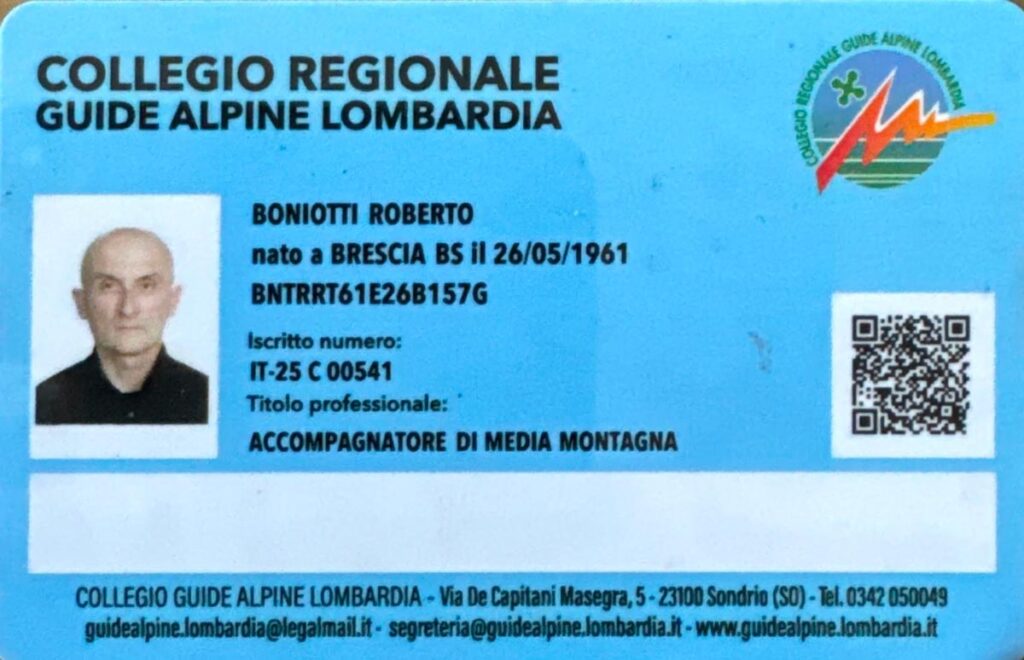
Roberto Boniotti
My name is Roberto Boniotti and the mountains are my life. For over 40 years, I have been exploring peaks, valleys, and trails, turning my passion into a profession that combines technical expertise, safety, and respect for nature.
My parents passed on their passion for the mountains to me from a very young age. From my first walks in the woods with my parents, I gradually began to explore the areas I encountered and to look up at the sky, toward those mountains that seemed unreachable. And with each new summit reached, new horizons and mountains to discover and explore gradually opened up.
With friends, I started attending Italian Alpine Club courses in mountaineering, ski mountaineering, and rock climbing, and eventually, the mountains became my world—discovered and yet to be discovered in all their aspects.
After many years of life experience in the mountains and having led students through the Alps as a mountaineering and ski mountaineering instructor—training them from a technical, cultural, and human perspective—I earned my Mountain Leader certification in 2021 to turn my passion into a job and share my experiences with those who want to enjoy the pleasure of the mountains with me.

A mountain trekking route is considered easy when it has a modest elevation gain, lasts a few hours, and follows well-marked trails without exposed sections.
It’s ideal for those new to the mountains, families, or anyone looking for a relaxing walk surrounded by nature.
In summary:
Always remember that weather and terrain conditions can affect the difficulty, so it’s best to set off prepared!
A mountain trekking route is defined as medium when the elevation gain increases, the walking time gets longer, and the terrain may have steeper or more irregular sections.
It requires some training and a certain familiarity with mountain environments, but is within reach of many hikers.
In summary:
Always remember that weather conditions and terrain can affect difficulty, so it’s best to start prepared!
A mountain trekking route is defined as difficult when the duration and elevation gain are significant and the trail includes more technical or exposed sections. Good physical fitness, experience, and the right gear are needed, as these itineraries are designed for those who want to challenge themselves and take on a more demanding adventure.
In summary:
Always remember that weather and terrain conditions can affect the difficulty, so it’s best to be prepared!
 Mountain